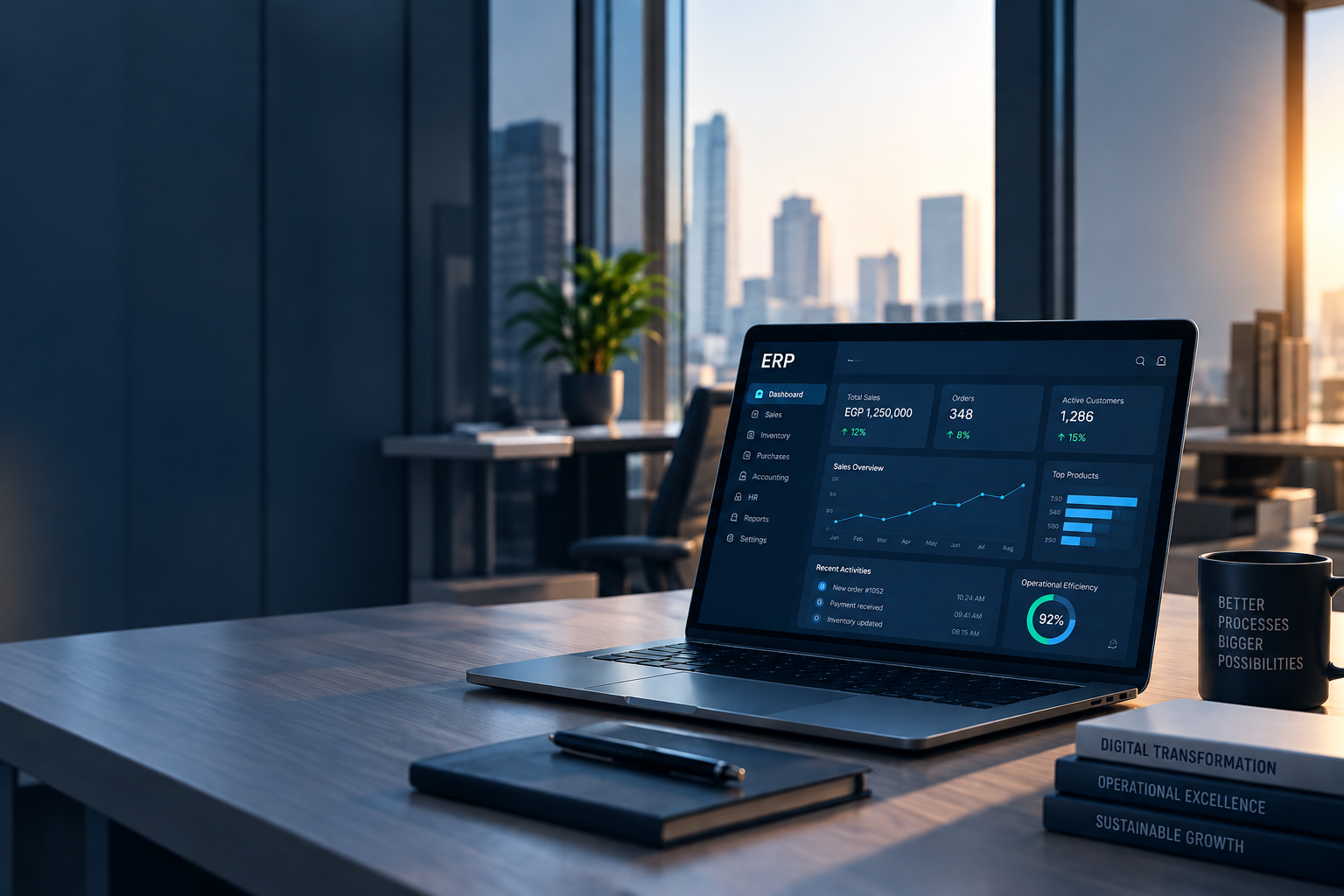
In a rapidly changing business environment, mid-sized companies need more than sales growth to remain competitive. They need efficient operations, reliable data, and the ability to adapt to changing customer and business requirements.
As companies expand, off-the-shelf software often begins to reveal its limitations—especially when operations become more complex and require integrations or custom workflows that standard solutions cannot fully support.
This is why custom ERP has become a strategic investment for companies looking for more than a basic accounting or inventory system. It is an investment in an operational platform designed around the business itself.
1. Because every business operates differently
No two companies have exactly the same workflows. A distribution company may need advanced inventory, branch, and purchasing management, while a services company may need project, contract, and billing management. Clinics and healthcare organizations need appointment scheduling connected with medical files and billing.
Off-the-shelf ERP systems may offer these functions in a general form, but they do not always match the company’s actual way of working. A custom ERP, on the other hand, is designed around real business processes, reducing the need to change operations to fit the software.
2. Because customization has become a competitive advantage
When a system accurately reflects how a company operates, it becomes easier to process orders, reduce errors, accelerate workflows, and improve customer experience.
For example, a custom ERP can connect sales, inventory, purchasing, and accounting in one seamless workflow, allowing data to move automatically between departments instead of being re-entered manually.
🎯 The Result: Less time spent on repetitive clerical tasks, and more time focused on strategic growth.
3. Because data is now the foundation of decision-making
Mid-sized companies often rely on data spread across Excel sheets, accounting systems, sales applications, and disparate tools. Over time, collecting and analyzing this fragmented data becomes a serious operational barrier.
A custom ERP centralizes business data into a single unified platform, providing reports and executive dashboards tailored to the exact KPIs management actually tracks.
Instead of merely asking, “What happened?”, management can ask higher-value strategic questions:
- Inventory control: Where is dead stock accumulating across warehouses?
- Profitability: Which specific products or services generate the highest net margin?
- Branch performance: Which branches or departments require process optimization?
- Bottlenecks: Where are repetitive errors occurring or customer workflows getting delayed?
4. Because integration with other systems is now essential
Modern businesses rarely operate through a single siloed system. They require seamless connections to payment gateways, e-commerce websites, mobile sales applications, HRMS, and marketing automation tools.
A custom ERP allows these integrations to be engineered around the company’s specific workflows, eliminating disconnected point solutions and manual data re-entry that drains productive hours.
5. Because AI creates real value when embedded into operations
AI is no longer just a tool for copywriting or chat. When embedded directly into an ERP workflow, it powers intelligent data analysis, pattern recognition, proactive inventory alerts, demand forecasting, and automated operational decisions.
However, the true value does not come from slapping the word AI onto a system—it comes from using targeted machine intelligence to solve a concrete operational problem.
6. Because sustainable growth requires a scalable system
An off-the-shelf package may seem sufficient at the beginning of a company’s journey. However, as the business opens new branches, hires more team members, and introduces new product lines, off-the-shelf software quickly becomes restrictive.
A custom ERP is architected to scale alongside your ambitions, enabling new modules, custom workflows, and third-party integrations to be introduced seamlessly without overhauling your entire core architecture.
7. Because investment should be measured by ROI, not purchase price
Off-the-shelf software might look cheaper on day one, but the hidden total cost of ownership (TCO) adds up rapidly:
- Recurring per-user license fees that escalate as your team expands.
- Costly third-party connector plugins and customization workarounds.
- Extensive manual labor to bridge system gaps.
- The inevitable, disruptive cost of replacing the entire system after 2–3 years.
That is why enterprise leaders evaluate custom ERP based on Return on Investment (ROI) and long-term operational freedom, rather than just initial licensing fees.
💡 Conclusion: In 2025, custom ERP is no longer just a technical choice for mid-sized enterprises—it is an engine for agility, operational control, and enduring market leadership.
The real investment is not in buying software. It is in building a better way of working.
في بيئة أعمال تتغير بسرعة، لم يعد نجاح الشركات المتوسطة يعتمد فقط على زيادة المبيعات، بل على قدرتها على إدارة العمليات بكفاءة، وتحويل البيانات إلى قرارات، والتكيف مع احتياجات العملاء. ومع توسع الشركات، تبدأ الأنظمة الجاهزة في إظهار حدودها، خصوصًا عندما تصبح العمليات أكثر تعقيدًا وتحتاج إلى تكاملات وتخصيصات لا توفرها الحلول التقليدية.
لهذا السبب، أصبح الـ ERP المخصص خيارًا استراتيجيًا للشركات التي تبحث عن أكثر من مجرد برنامج لإدارة الحسابات والمخزون. فهو يمثل استثمارًا في بنية تشغيلية مصممة حول طبيعة العمل، وليس مجرد شراء نظام جاهز.
1. لأن طبيعة كل شركة مختلفة
لا تعمل جميع الشركات بالطريقة نفسها. فشركة التوزيع تحتاج إلى إدارة مخزون وفروع وطلبات شراء، بينما تحتاج شركة الخدمات إلى إدارة مشاريع وعقود وفوترة، وتحتاج العيادات إلى ربط المواعيد والملفات الطبية والمدفوعات.
قد توفر الأنظمة الجاهزة هذه الوظائف بشكل عام، لكنها لا تضمن دائمًا توافقها مع دورة العمل الفعلية. أما النظام المخصص، فيُبنى وفق العمليات الحقيقية للشركة، مما يقلل الحاجة إلى تغيير طريقة العمل لتناسب البرنامج.
2. لأن التخصيص أصبح ميزة تنافسية
عندما تمتلك الشركة نظامًا يعكس عملياتها بدقة، يصبح من الأسهل تنفيذ الطلبات، وتقليل الأخطاء، وتسريع الإجراءات، وتحسين تجربة العملاء.
على سبيل المثال، يمكن لنظام مخصص أن يربط بين المبيعات والمخزون والمشتريات والحسابات في دورة واحدة، بحيث تنتقل البيانات تلقائيًا بين الأقسام بدلًا من إعادة إدخالها يدويًا.
🎯 النتيجة: وقت أقل في الأعمال الروتينية، ووقت أكبر للتركيز على النمو.
3. لأن البيانات أصبحت أساس القرار
تعتمد الشركات المتوسطة على بيانات كثيرة موزعة بين ملفات Excel، وأنظمة محاسبية، وبرامج مبيعات، وأدوات أخرى. ومع الوقت، يصبح جمع هذه البيانات وتحليلها تحديًا حقيقيًا يعطل الإدارة.
يساعد الـ ERP المخصص على توحيد البيانات داخل منصة واحدة، مع تقارير ولوحات معلومات مصممة وفق مؤشرات الأداء التي تحتاجها الإدارة فعلًا.
بدلًا من السؤال: "ماذا حدث؟"، يمكن للإدارة الانتقال إلى أسئلة أكثر أهمية وعمقًا:
- إدارة المخزون: أين تتراكم المخزونات غير المتحركة عبر المستودعات؟
- الربحية: ما المنتجات أو الخدمات الأكثر ربحية حقيقية؟
- كفاءة الفروع: ما الفروع أو الأقسام التي تحتاج إلى تحسين تشغيلي؟
- إزالة العقبات: أين تتكرر الأخطاء أو تتأخر العمليات في دورة العميل؟
4. لأن التكامل مع الأنظمة الأخرى أصبح ضرورة
الشركات الحديثة لا تعمل من خلال نظام واحد فقط. فهي تحتاج إلى التكامل السلس مع بوابات الدفع الإلكتروني، والمواقع والمتاجر، وتطبيقات المبيعات، وأنظمة الموارد البشرية، وأدوات التسويق، وغيرها.
الـ ERP المخصص يتيح تصميم هذه التكاملات وفق احتياجات الشركة بدقة، بدلًا من الاعتماد على حلول منفصلة أو عمليات يدوية تستنزف الوقت والجهد.
5. لأن الذكاء الاصطناعي يضيف قيمة حقيقية عند دمجه في العمليات
لم يعد الذكاء الاصطناعي مجرد أداة للكتابة أو المحادثة. عند دمجه داخل نظام ERP، يمكن أن يساعد في تحليل البيانات، واكتشاف الأنماط، وتقديم تنبيهات استباقية، ودعم التنبؤ بالطلب، وتحسين بعض القرارات التشغيلية اليومية.
لكن القيمة الحقيقية لا تأتي من إضافة كلمة AI إلى النظام، بل من استخدامه لحل مشكلة فعلية تواجه الشركة.
6. لأن النمو يحتاج إلى نظام قابل للتوسع
قد يكون النظام الجاهز مناسبًا في بداية رحلة الشركة، لكنه قد يصبح عائقًا مع زيادة الفروع، والموظفين، والمنتجات، والعملاء، وتعقيد العمليات.
النظام المخصص يمكن تصميمه ليواكب هذا النمو، مع إمكانية إضافة وحدات جديدة وتطوير الوظائف دون الحاجة إلى تغيير المنظومة بالكامل أو تعطيل العمل.
7. لأن الاستثمار يجب أن يُقاس بالعائد، وليس بسعر الشراء فقط
قد يبدو النظام الجاهز أقل تكلفة عند الشراء، لكن التكلفة الحقيقية تشمل أيضًا:
- اشتراكات متكررة لكل مستخدم تتضاعف مع نمو الفريق.
- تكلفة التخصيصات والإضافات والبرمجيات الوسيطة.
- الوقت الضائع في الأعمال اليدوية ومعالجة أخطاء عدم التوافق.
- تكلفة تغيير النظام بالكامل بعد سنتين أو ثلاث عند وصوله لطاقته القصوى.
لذلك، يجب تقييم الـ ERP المخصص من خلال العائد على الاستثمار (ROI) والحرية التشغيلية التي يوفرها، وليس فقط من خلال سعر الترخيص الأولي.
💡 الخلاصة: في 2025، لم يعد الـ ERP المخصص مجرد خيار تقني للشركات المتوسطة، بل أصبح أداة لدعم الكفاءة، والمرونة، والنمو. فالشركة التي تستثمر في نظام يفهم عملياتها، ويربط بياناتها، ويدعم قراراتها، تكون أكثر قدرة على المنافسة والتوسع.
الاستثمار الحقيقي ليس في شراء برنامج، بل في بناء طريقة عمل أفضل.
Is it time for an ERP system designed around your business?
Connect with ITQAN Solutions to explore custom software solutions that support your operations and help your business grow.
هل حان الوقت لنظام ERP مصمم حول احتياجات شركتك؟
تواصل مع فريق ITQAN Solutions لاستكشاف حلول برمجية مخصصة تدعم عملياتك وتساعدك على النمو.